
Introduction
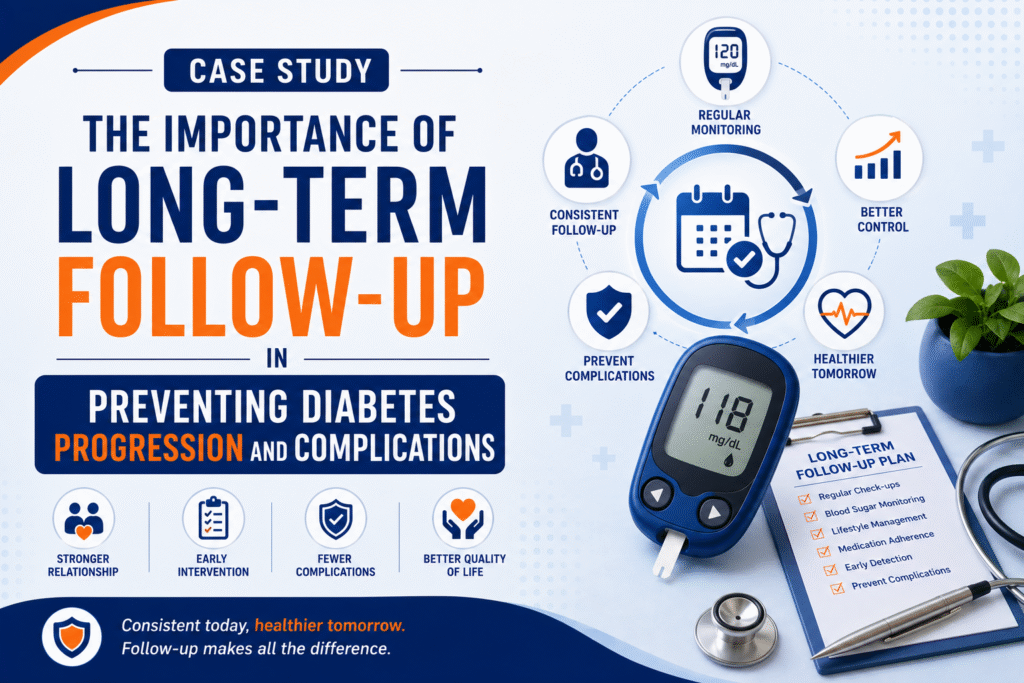
Type 2 diabetes is a chronic progressive disease that requires regular follow-up, timely treatment adjustments, and active patient participation. Interruptions in care can lead to worsening glycemic control and recurrence of diabetes-related complications. This case highlights how continuous monitoring and individualized management helped achieve good metabolic control while demonstrating the consequences of loss to follow-up.
Background
A female patient with Type 2 diabetes since 2012 and hypertension since 2017 presented with poorly controlled diabetes. Her major complaints were severe burning sensation, pain, and numbness in both feet for the past 2–3 years, suggestive of diabetic peripheral neuropathy. She also had a positive family history of diabetes.
At presentation, she was receiving metformin, glimepiride, sitagliptin, antihypertensive medications (amlodipine and telmisartan), and aspirin, but her diabetes remained uncontrolled.
Investigations
Initial evaluation revealed:
- Fasting blood glucose: 236 mg/dL
- Postprandial blood glucose: ~300 mg/dL
- HbA1c: 9.7%
- Urine Albumin-Creatinine Ratio (UACR): 61.2 mg/g, indicating early diabetic kidney involvement
- Vitamin B12: 385 pg/mL (suboptimal in the presence of neuropathy)
- Renal function: Normal
- Lipid profile: Within normal limits
- Thyroid profile: Normal
- Liver function: Mild elevation of ALP; otherwise normal
Clinical examination was consistent with diabetic peripheral neuropathy, while no active diabetic foot lesions were detected.
Our Approach
Considering the patient’s uncontrolled diabetes, neuropathic symptoms, and early nephropathy, an individualized treatment plan was initiated.
- Basal insulin (Insulin Tresiba) was started to achieve rapid glycemic control.
- Existing oral antidiabetic medications were optimized.
- Vitamin B12 replacement therapy was administered to address deficiency contributing to neuropathic symptoms.
- Structured self-monitoring of blood glucose was advised with fasting and post-meal readings.
- Dietary counselling and lifestyle modification were reinforced.
- After improvement in glucose control, dapagliflozin was introduced and insulin was gradually discontinued based on the patient’s preference.
- Oral semaglutide was later initiated for additional glycemic control and weight management and titrated up to 7 mg as tolerated.
- Continuous Glucose Monitoring (CGM) was used to help the patient understand glucose patterns, food responses, and improve self-management.
Recovery Outcome
The patient showed significant improvement with regular follow-up.
- HbA1c reduced from 9.7% to 6.7%
- Neuropathic symptoms improved considerably.
- UACR normalized from 61.2 mg/g to 20 mg/g, suggesting improvement in early diabetic kidney disease.
However, due to personal reasons, she was unable to attend regular follow-up visits for nearly two years. During this period, her treatment was interrupted, and she subsequently returned with worsening glycemic control and recurrence of severe neuropathic symptoms.
- HbA1c had increased to 9.6%.
- Treatment was reinitiated with basal insulin, optimization of oral antidiabetic therapy, CGM-guided glucose monitoring, and renewed dietary counselling. At the latest follow-up:
- Fasting blood glucose: 118 mg/dL
- Postprandial blood glucose: 128 mg/dL
- HbA1c: 6.9%
Glycemic control was successfully restored, and her neuropathic symptoms improved significantly.
Doctor’s Perspective
This case demonstrates that diabetes management extends beyond prescribing medications. Regular follow-up allows timely treatment modification, monitoring of complications, reinforcement of lifestyle measures, and improved patient adherence. Even when good control is achieved, discontinuation of follow-up can rapidly reverse progress and increase the risk of long-term complications.
Key Learning
- Consistent follow-up is essential for sustained diabetes control.
- Early intensive treatment can reverse poor glycemic control and improve diabetes-related complications.
- CGM and structured self-monitoring enhance patient engagement and treatment decisions.
- Vitamin B12 deficiency should be assessed in patients with neuropathic symptoms, especially those receiving long-term metformin.
- Early detection and treatment of diabetic kidney disease can improve renal outcomes.
Our Message
Diabetes is a lifelong condition that requires continuous care—not just medication. Regular follow-up, individualized treatment, lifestyle modification, and patient education are the foundation of preventing complications and maintaining long-term health. Every missed follow-up is a missed opportunity to protect organs, preserve quality of life, and improve outcomes.