
Introduction
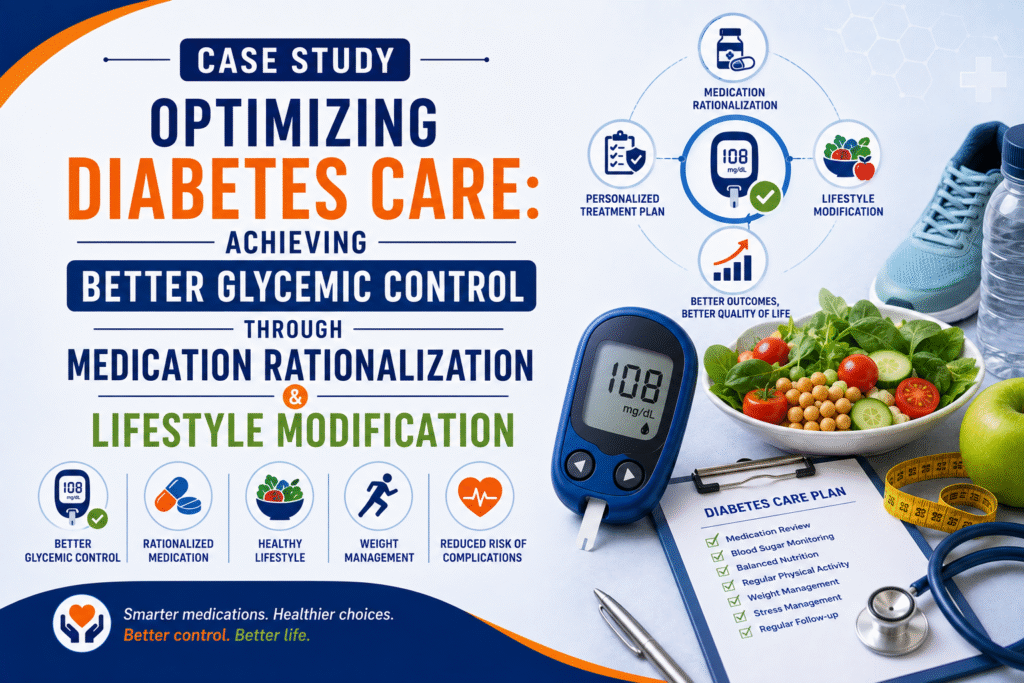
Managing type 2 diabetes can become challenging when blood glucose remains uncontrolled despite multiple medications. This case demonstrates how a structured evaluation, individualized treatment plan, and consistent lifestyle changes helped improve glycemic control while reducing medication burden.
Background
A patient with type 2 diabetes diagnosed in 2018 presented with persistently uncontrolled blood glucose levels despite being prescribed 7–8 antidiabetic medications, including glimepiride, metformin, repaglinide, dapagliflozin, sitagliptin, pioglitazone, and saroglitazar. The patient was also obese, with a weight of 110 kg, height of 189 cm, and a BMI of 31.24 kg/m², increasing the risk of diabetes-related complications.
Investigations
Initial evaluation revealed:
- Fasting Blood Sugar: 172 mg/dL
- Postprandial Blood Sugar: 222 mg/dL
- HbA1c: 8.4%
- Total Cholesterol: 215 mg/dL
- LDL Cholesterol: 148 mg/dL
- SGPT: 48 U/L (mildly elevated)
- Urine examination: Normal
These findings indicated uncontrolled diabetes along with dyslipidemia and obesity.
Our Approach
Instead of simply adding more medications, we performed a comprehensive review of the patient’s treatment plan. The focus was on:
- Rationalizing and simplifying the diabetes medications.
- Continuing only the most appropriate agents (glimepiride, metformin, and pioglitazone).
- Providing individualized dietary counseling.
- Encouraging regular physical activity and weight reduction.
- Scheduling regular follow-up visits to monitor progress and adjust therapy as needed.
- No GLP-1 was used because the patient refused therapy.
Recovery Outcome
- After 4 months:
- Weight reduced from 110 kg to 103 kg (7 kg loss).
- Fasting Blood Sugar improved to 139 mg/dL.
- Postprandial Blood Sugar improved to 185 mg/dL.
- HbA1c decreased from 8.4% to 7.3%.
- The patient achieved better glycemic control with fewer medications and improved adherence to lifestyle modifications.
Doctor’s Perspective
This case highlights that uncontrolled diabetes is not always due to inadequate medication but may result from an overly complex treatment regimen and suboptimal lifestyle habits. Simplifying therapy while emphasizing nutrition, exercise, and regular follow-up can often produce better outcomes than increasing the number of medications.
Key Learning
- More medications do not always mean better diabetes control.
- Medication optimization should be considered before escalating therapy.
- Weight reduction significantly contributes to improved glycemic control.
- Lifestyle modification remains a cornerstone of diabetes management.
- Regular monitoring allows timely treatment adjustments and better long-term outcomes.
Our Message
Effective diabetes management is about choosing the right treatment, not just adding more medicines. A personalized approach that combines medication optimization, healthy eating, physical activity, and consistent follow-up can achieve meaningful improvements in blood sugar control and overall health.