
Introduction
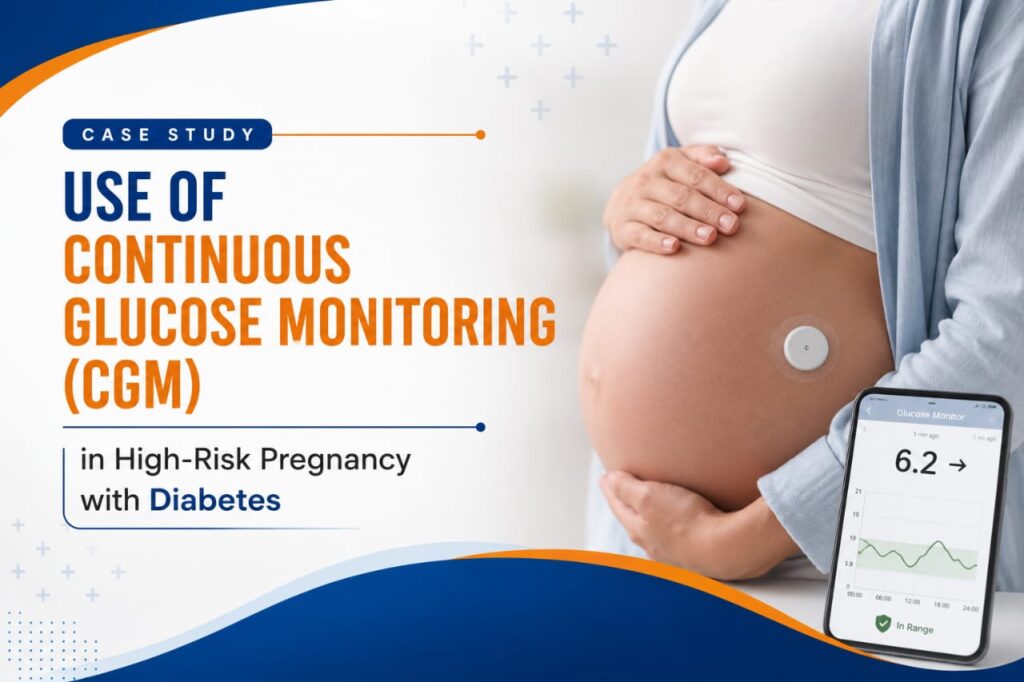
Diabetes during pregnancy requires careful monitoring and strict glycemic control to ensure the safety of both mother and baby. Women with a previous history of gestational diabetes and associated conditions like hypertension are at a higher risk of complications during pregnancy. Continuous Glucose Monitoring (CGM) can play an important role in achieving better glucose control, especially in patients who find frequent finger-prick monitoring difficult.
Patient Background
A 36-year-old female presented at 8 weeks of gestation with uncontrolled diabetes. She had a past history of gestational diabetes during her previous pregnancy three years earlier and was also a known case of hypertension. She became Type 2 Diabetic before this pregnancy. Her blood glucose was fasting around 120, post around 160, and HbA1c 7.2.
She was taking diabetes medications in between the pregnancies ,when she came she was already converted into insulin by some another physician:
- Short-acting insulin three times daily.
- Long-acting insulin 13 units once daily.
Despite treatment, her blood glucose levels were not adequately controlled.
Clinical Approach
Initially, the patient was advised strict self-monitoring of blood glucose using a glucometer:
- Fasting blood sugar
- Pre- and post-breakfast
- Pre- and post-lunch
- Pre- and post-dinner readings
However, regular monitoring became difficult because she was also managing a small child at home. To improve glucose monitoring and treatment adjustment, Continuous Glucose Monitoring (CGM) was advised.\
Her insulin regimen was modified:
- Basal insulin was changed to Insulin Degludec (Tresiba)
- Rapid-acting insulin was continued before meals
- Insulin doses were gradually titrated according to CGM trends and post-meal glucose values
Target glucose levels were:
- Fasting and nighttime sugars: 80–85 mg/dL
- Post-meal sugars: 120–130 mg/dL
Throughout pregnancy, insulin requirements steadily increased, which is common due to progressive insulin resistance during gestation.
The patient underwent CGM monitoring thrice by 30–32 weeks of pregnancy for detailed assessment of glycemic trends.
Current insulin regimen:
- Tresiba 10 units at 10 p.m.
- Rapid-acting insulin doses: 24 units, 14 units, and 12 units before meals Her hypertension was also managed with medications.
- Repeated fructosamine testing was performed twice during follow-up to assess short-term glycemic control, and the reports showed satisfactory improvement.
Dietary Intervention
The patient received individualized dietary counselling focused on:
- Controlled carbohydrate intake
- Small, frequent meals
- Balanced nutrition during pregnancy
- Avoidance of high glycemic index foods
- Adequate protein and fiber intake
Meal planning was synchronized with insulin timing to minimize glucose fluctuations and post-meal spikes.
Outcome
With the combined use of CGM, insulin titration, dietary management, and close follow-up:
- Blood glucose levels improved significantly
- Glycemic targets were achieved consistently
- Post-meal glucose excursions were better controlled
- The patient was able to monitor glucose more conveniently with reduced burden compared to frequent finger-prick testing.
- Fructosamine levels indicated improved overall glycemic control.
- The pregnancy is continuing under close monitoring with stable diabetes management.
- The Obstetrician plans to deliver around 36-38 weeks.
Doctor’s Perspective
This case highlights the importance of individualized diabetes management in high-risk pregnancy. CGM proved extremely useful in a patient who was unable to perform regular self-monitoring due to practical difficulties at home.
CGM helped in:
- Detecting glucose fluctuations more accurately.
- Guiding insulin dose adjustments.
- Maintaining tight glycemic control.
- Improving patient compliance and convenience.
- Careful monitoring and early intervention helped reduce the risk of maternal and fetal complications.
Key Learning
- In Women with Gestational diabetes, blood glucose usually resolves at the birth of their offspring, but some of the women remain diabetic as dysglycaemia continues.
- Similar situation was observed in this patient, where gestation diabetes later progressed to type 2 diabetes mellitus.
- Prior to this pregnancy we had done pre – pregnancy counseling.
- Tight glucose control during pregnancy is essential for maternal and fetal safety.
- CGM is highly beneficial in high-risk pregnancies and in patients struggling with frequent glucose testing.
- Insulin requirements increase progressively during pregnancy and require regular adjustment.
- Multidisciplinary management including insulin therapy, diet counselling, and close monitoring improves outcomes.
Conclusion
This case demonstrates the successful use of Continuous Glucose Monitoring in managing diabetes during a high-risk pregnancy. CGM allowed meticulous glucose monitoring, better insulin titration, and improved patient compliance. Early intervention, structured monitoring, and individualized care helped achieve optimal glycemic control throughout pregnancy and supported safer maternal and fetal outcomes.